
Medication Reminder Support For Seniors Managing Daily Routines
Medication reminder support helps seniors stay on schedule without turning family life into a daily monitoring job, and it often works best when it is built into meals, hygiene, mobility, and companionship. Families comparing home care services Houston, TX often ask if a caregiver can “make sure Mom takes her pills,” but the better question is whether the whole day supports safe, consistent routines.
Table of Contents
What Medication Reminder Support Really Looks Like
Non-medical caregivers do not prescribe, change, sort, or administer medication. That belongs to the senior, family, pharmacist, or licensed medical professional, depending on the situation. What caregivers can often do is remind, observe, document, and keep the routine from falling apart.
In real homes, reminders sound simple, but timing is everything. A caregiver may say, “It’s time for your morning medication,” after breakfast is ready, water is nearby, and the senior is seated safely. That small setup matters because many missed doses happen when a person is rushed, distracted, hungry, or trying to do too many things at once.
We also see families rely on phone alarms that work well for a few weeks, then fade into background noise. A senior may silence the alarm while watching TV, then forget why it rang. A person with mild memory loss may take pride in saying, “I already did that,” even when the pillbox shows otherwise.
Why Missed Doses Often Start as Routine Problems
Medication mistakes are not always about stubbornness or memory loss. Sometimes the cause is a broken morning pattern. A senior wakes later, skips breakfast, avoids the kitchen because standing feels tiring, then misses the medication that usually follows the meal.
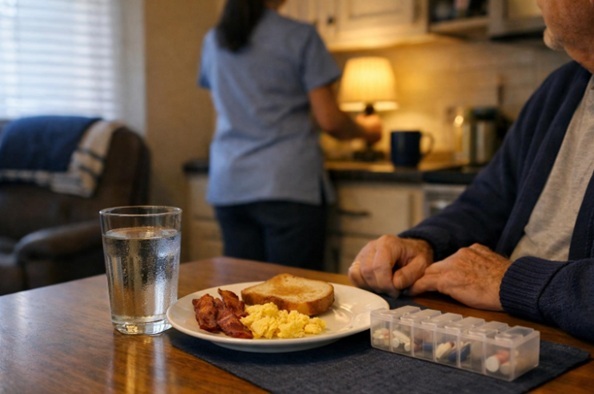
One non-obvious warning sign is a full glass of water untouched beside a pill organizer. Families may focus on whether the pills are gone, but hydration, appetite, and hand strength can affect whether a senior feels able to take medication comfortably. If the pill bottle has a tight cap or the organizer sits in a dark corner, the barrier may be physical, not mental.
Another sign is “pill drift,” when a 9 a.m. dose slowly becomes 10:30, then noon. That drift can point to sleep changes, depression, confusion, pain while getting dressed, or fear of walking to the kitchen alone. A reminder system works better when someone notices the pattern, not just the missed pill.
If your family is unsure whether the issue is forgetfulness, fatigue, or too much responsibility falling on one person, it may help to talk through the daily flow with Always Best Care of Kingwood at (832) 852-5292.
A Realistic Morning That Shows the Difference
Picture a daughter who calls her dad every morning before work. He answers cheerfully, says he took his medication, and tells her not to worry. Two weekends later, she finds several days still sitting in the pill organizer.
What changed was not his love for independence. He had started sleeping in his recliner because the bedroom felt too far away at night. Mornings became slower, breakfast became coffee only, and medication no longer had a clear place in the day.
With caregiver support, the morning can become predictable again. The caregiver arrives, turns on lights, prepares a simple breakfast, checks that the pill organizer is visible, offers a reminder, and stays nearby long enough for the senior to complete the routine. The daughter still stays involved, but she is no longer trying to supervise from a phone call.
When Reminder Support Is Usually Enough
Medication reminder support may be a good fit when the senior understands what the reminder means and can safely take the medication once prompted. It also helps when the main problems are missed times, disorganized mornings, low motivation, or lack of follow-through.
Families may notice these practical signs:
- Pill organizers are mostly correct, but doses are sometimes late or skipped.
- The senior forgets evening medication when tired or watching TV.
- Meals, hydration, and medication timing are no longer connected.
- Family reminders are creating tension or repeated arguments.
- The senior accepts help better from a calm caregiver than from an adult child.
This kind of care can preserve dignity. A caregiver is not there to scold or take over. The goal is to make the right action easier at the right time.
How Medication Reminders Fit Into the Rest of the Day
The best reminder plan is not only about medication. It sits inside a larger daily rhythm that may include bathing, dressing, meals, light housekeeping, laundry, errands, and companionship. A senior who eats better, moves safely, and has someone to talk with is often more willing to follow a routine.
This is where companionship matters more than many families expect. A trusted caregiver may notice that a senior skips evening pills on lonely days, or that confusion increases after a poor night of sleep. Social support can reduce the stress around care tasks, which is why we often connect medication routines with companion care that supports seniors aging at home.
A practical care plan may include written notes for family, reminders tied to meals, and a consistent schedule so the senior knows who is coming and when. Consistency is not a luxury here. It is often what turns a fragile system into a workable routine.
Choosing the Right Support Without Taking Over
Families do not need to wait for a crisis to add help. If you are checking pillboxes every visit, calling several times a day, or feeling unsure whether your loved one is telling you the full story, that is enough reason to reassess the routine. Early support can protect independence because it adds structure before major decisions feel urgent.
When choosing care, ask how caregivers document reminders, how schedule changes are handled, and how the agency communicates concerns to family. Ask what caregivers can and cannot do with medication, and make sure the answer is clear. Vague promises are not helpful when safety depends on boundaries.
Medication reminder support is not about controlling a senior’s day. It is about making daily life easier to follow, safer to manage, and less stressful for everyone involved. If your family is looking at home care services Houston, TX and wants practical help with routines, meals, and reminders, Always Best Care of Kingwood can talk through options at (832) 852-5292.