
Why Seniors Don’t Always Feel Thirsty: Understanding the Importance of Staying Hydrated in Framingham

As we age, thirst does not always do its job the way it once did. This can be a serious concern because older adults may become dehydrated before they recognize that their bodies need fluids. For families and caregivers, understanding why this happens and building hydration into the daily routine can make a meaningful difference in a senior’s comfort, energy, safety, and overall well-being.
What You Will Learn
- Why seniors may not always recognize thirst and why regular hydration matters for their well-being.
- Common signs that may suggest a loved one needs more fluids and when to seek additional support.
- Simple, practical ways to encourage healthier hydration habits through drinks, meals, and daily routines.
- How family members and caregivers, including Always Best Care of Framingham, MA, can help seniors stay comfortable, confident, and supported at home.
Table of Contents
Why Thirst Changes With Age
The body does not always send the same “drink up” signal later in life. As people get older, the brain may respond more slowly to fluid loss, so a senior may already be low on fluids without feeling strongly thirsty. In other words, waiting until someone says they are thirsty may not be the most reliable way to make sure they are drinking enough.
Several everyday factors can increase the risk of dehydration. Kidney function may become less efficient with age, making it harder for the body to conserve water. Certain medications, including diuretics or “water pills,” can increase fluid loss. Long-term health conditions, mobility challenges, and concerns about frequent trips to the bathroom can also lead seniors to drink less than they need. Even when a senior is not asking for water, their body may still need regular fluids throughout the day.

Why Hydration Matters So Much
Water plays an important role in nearly every system of the body. It supports digestion, helps regulate body temperature, assists with circulation, and contributes to healthy blood pressure. Proper hydration also supports brain function, which can be especially important for seniors who may already be managing memory changes, medication routines, or chronic health concerns.
When an older adult does not get enough fluids, the effects can show up in ways that may seem small at first but can quickly interfere with daily life. Dehydration may contribute to tiredness, headaches, constipation, dizziness, low blood pressure, trouble concentrating, and an increased risk of falls. It can also raise the risk of urinary tract infections. Even mild dehydration can make a senior feel less steady, less alert, and less comfortable during the day.
Warning Signs Families Should Notice
Since thirst may not appear early enough to be helpful, families and caregivers should watch for changes that could point to dehydration. A dry mouth, cracked lips, dry skin, dark-colored urine, or urinating less often than usual can all be signs that someone may need more fluids. Weakness, fatigue, loss of appetite, dizziness when standing, confusion, forgetfulness, or mood changes can also be important warning signs.
These symptoms do not always mean dehydration is the cause, but they are worth paying attention to, especially if they appear suddenly or worsen. If a senior develops sudden confusion, significant weakness, fainting, severe dizziness, or other concerning symptoms, it is important to contact a healthcare provider promptly.

Easy Ways to Build Better Hydration Habits
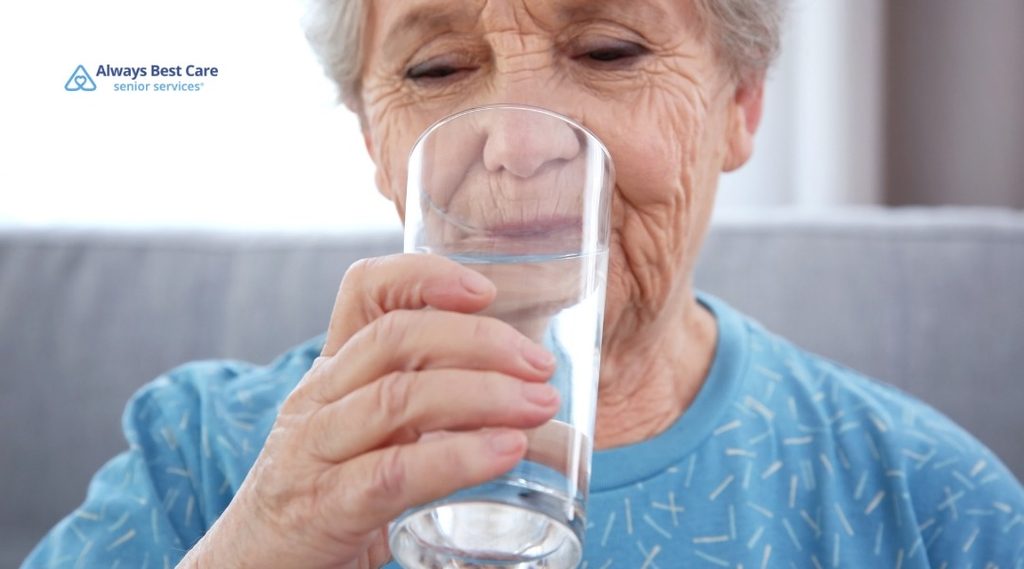
A steady routine is usually more effective than waiting for thirst to kick in. Encouraging a senior to drink a glass of water with each meal can provide a simple foundation for the day. Keeping a filled water bottle or cup within easy reach also makes it more convenient to take small sips regularly, particularly for someone with mobility limitations.
Phone reminders, written notes, or a familiar daily schedule can help make drinking fluids feel automatic rather than like another task to remember. Seniors can sip water throughout the day instead of trying to drink a large amount at once. It can also help to offer fluids before exercise, errands, time outdoors, or warm-weather activities, since fluid needs may increase during periods of activity or heat.
Small, consistent habits often have the biggest payoff. A favorite cup, flavored water with fruit, or a warm caffeine-free drink may make hydration more enjoyable for someone who does not like plain water.
Food and Drinks That Help Too
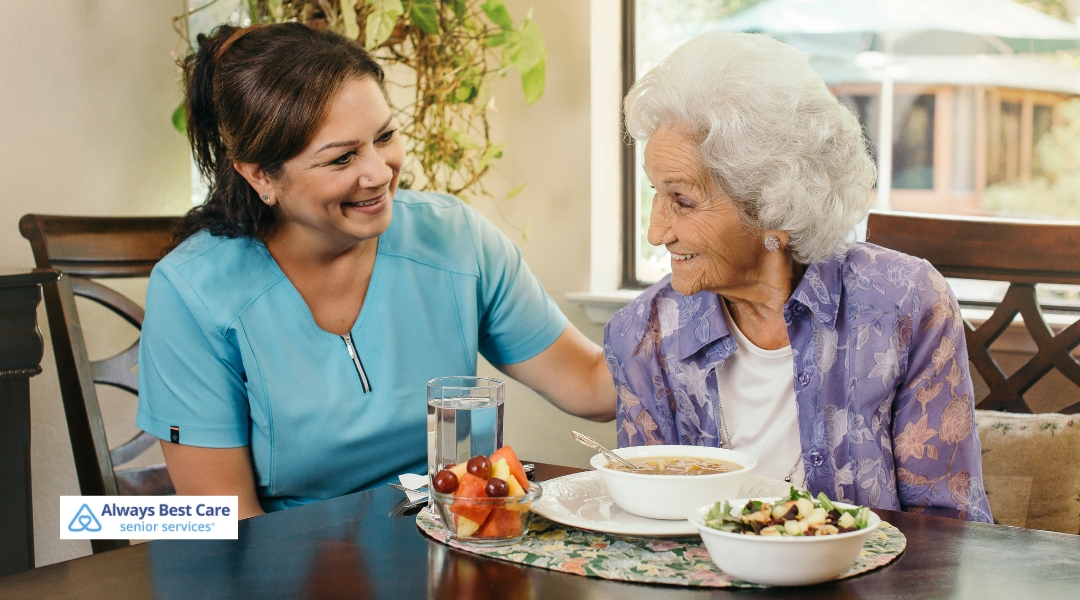
Water is usually the best choice for hydration, but it is not the only source of fluids. Many foods naturally contain high amounts of water and can contribute to a senior’s daily fluid intake. A colorful, balanced plate can support both nutrition and hydration.
Foods such as watermelon, cucumbers, oranges, strawberries, and lettuce are refreshing options with high water content. Broth-based soups can be especially comforting during cooler weather, while yogurt and low-fat milk can provide fluids along with nutrients such as protein and calcium. Herbal tea can also be a pleasant option for seniors who enjoy warm drinks.
For seniors with health conditions that affect fluid intake, such as heart failure or kidney disease, it is important to follow their healthcare provider’s recommendations about how much and what they should drink.
How Caregivers Can Lend a Hand
For seniors who live alone, have memory concerns, or manage multiple health conditions, hydration can easily fall through the cracks. Family members and caregivers can make a meaningful difference by offering beverages regularly rather than waiting to be asked. Having drinks prepared and easily accessible removes a common barrier, especially for seniors who struggle with mobility, arthritis, fatigue, or poor vision.
Caregivers can also prepare meals and snacks with hydrating foods, watch for changes in bathroom habits or alertness, and encourage extra fluids in hot weather. When a caregiver notices concerning changes, they can share those observations with family members or healthcare providers. These small acts of support can help make everyday life safer, easier, and more comfortable.
How Always Best Care of Framingham, MA Supports Healthy Hydration
At Always Best Care of Framingham, MA, we understand that hydration is not simply an extra task on a daily checklist. It is an important part of helping seniors feel well, stay comfortable, and remain confident at home. Our caregivers can provide support with meal preparation, drink reminders, companionship, and consistent routines that encourage healthy hydration throughout the day.
We also pay attention to changes that may signal a problem, helping families feel more informed and supported in their loved one’s day-to-day care. Whether a senior needs a friendly reminder to drink water, help preparing hydrating meals, or companionship that makes routines easier to maintain, dependable in-home support can make a real difference.

Frequently Asked Questions
Q: Why don’t seniors always feel thirsty?
A: As people age, the body may not sense fluid loss as quickly or strongly as it once did. This can make thirst less reliable, even when the body needs more water.
Q: What are the most common signs of dehydration?
A: Common warning signs include dry mouth, dark urine, urinating less frequently, dizziness, weakness, fatigue, constipation, confusion, and trouble concentrating.
Q: Can food help with hydration?
A: Yes. Foods with high water content, including watermelon, cucumbers, oranges, strawberries, soups, yogurt, and lettuce, can all contribute to daily fluid intake.
Q: How can families help seniors drink more water?
A: Families can offer beverages regularly, keep water within easy reach, include fluids with meals and snacks, use reminders, and build hydration into a senior’s established daily routine.
Stay Refreshed, Stay Supported
Seniors may not always feel thirsty, but their bodies still rely on consistent hydration to support energy, comfort, balance, and day-to-day health. With simple routines, hydrating foods, attentive family support, and regular reminders, drinking enough fluids can become a natural and manageable part of daily life.
If your loved one could benefit from extra support with hydration reminders, meal preparation, companionship, or everyday routines at home, contact Always Best Care of Framingham at (508) 691-8756 today to learn how compassionate in-home care can help them stay safe, comfortable, and supported.
Link to the Markdown File version of the article