Wound Care at Home: When Is Skilled Nursing Needed in Worcester,
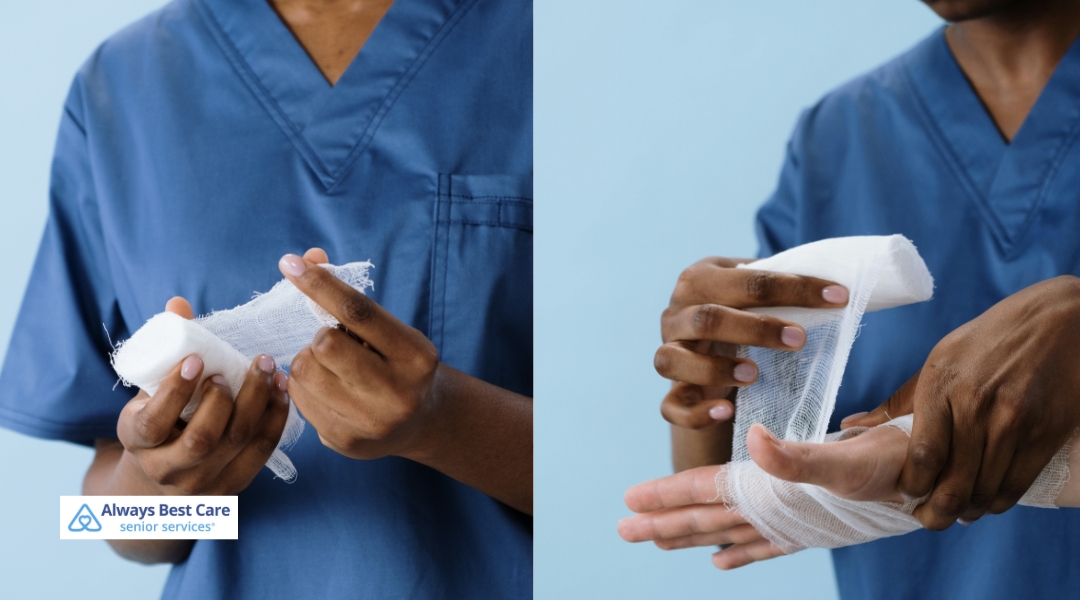
Healing from a wound at home sounds simple enough, but for older adults, it rarely is. Skin becomes more fragile with age, chronic conditions slow the body’s repair process, and what looks like a minor cut can quietly turn into a serious infection.
For families in Worcester caring for an aging loved one, understanding the difference between a wound you can manage at home and one that needs professional attention could make all the difference in recovery.
What You Will Learn
- Why aging, chronic health conditions, medications, and nutrition can make wound healing more difficult for older adults.
- Which wound types and warning signs may mean a loved one needs prompt medical attention or skilled nursing care.
- How skilled home health nurses and in-home caregivers can work together to support safer recovery at home.
- Simple ways families can help prevent pressure injuries and protect a senior’s skin each day.
Table of Contents
Why Wound Healing Is Different for Seniors
The biology of aging works against wound recovery in several ways. Older skin is thinner, less elastic, and slower to regenerate. Blood flow to the extremities often decreases, so less oxygen and fewer nutrients reach the wound site—both essential for tissue repair.
Chronic conditions compound the problem significantly:
- Diabetes damages blood vessels and nerves, reducing sensation and circulation in the feet and legs. A diabetic foot ulcer can go unnoticed until it becomes severe.
- Heart disease and peripheral artery disease restrict blood flow, starving wounds of the oxygen they need to close.
- Immunosuppressive medications (used for conditions like rheumatoid arthritis or after organ transplants) reduce the body’s ability to fight infection.
- Malnutrition and dehydration, common in older adults, deprive the body of the protein, zinc, and vitamin C needed for collagen production and tissue repair.
These factors don’t just slow healing — they create an environment where infections can take hold quickly and spread before symptoms become obvious.
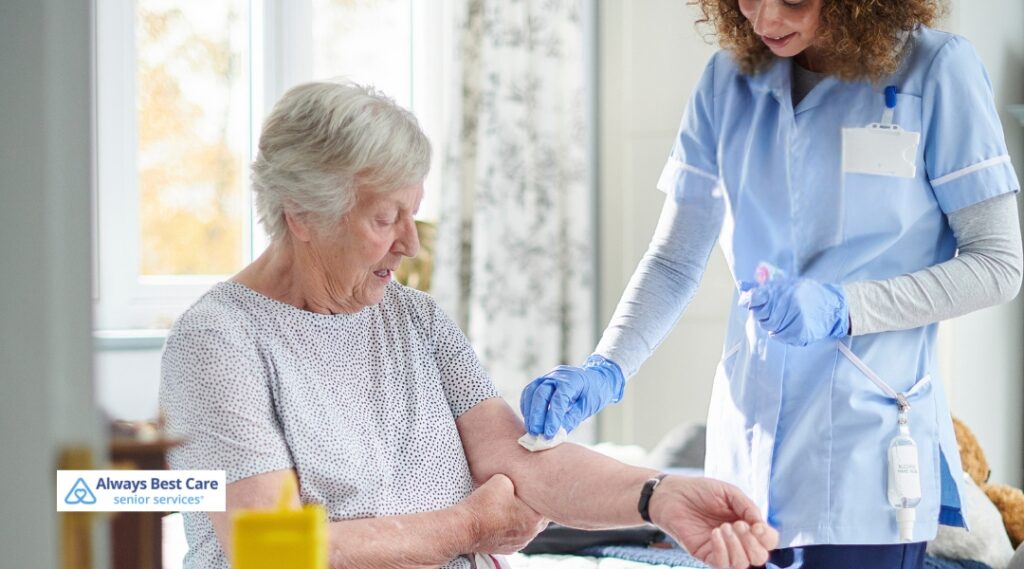
Types of Wounds That Typically Require Skilled Nursing
Not every wound needs a home health nurse, but several types carry enough complexity or risk that professional oversight is strongly recommended:
- Surgical incisions — especially following orthopedic, cardiac, or abdominal procedures, where proper closure and infection prevention are critical
- Pressure injuries (bedsores) — Stage 2 and above require clinical assessment, debridement in some cases, and specialized dressings
- Diabetic foot ulcers — High risk of infection and amputation if not managed with proper offloading, dressing protocols, and monitoring
- Venous and arterial leg ulcers — Require compression therapy or other vascular interventions alongside wound care
- Skin tears — Common in seniors on blood thinners; improper closure can lead to significant complications
- Burns — Even moderate burns in older adults need professional evaluation due to infection risk and fluid loss
- Chronic non-healing wounds — Any wound that has not shown measurable improvement after two to four weeks warrants skilled assessment
Warning Signs That Demand Immediate Attention
Families should know the red flags that signal a wound is no longer manageable at home:
- Increasing redness, warmth, or swelling around the wound edges
- Purulent (thick, cloudy, or foul-smelling) drainage
- The wound is growing larger rather than smaller
- Fever above 100.4°F or chills
- New confusion or sudden changes in mental status — a common sign of infection in older adults
- Streaking redness extending from the wound (a sign of spreading infection)
- The wound has not improved after one to two weeks of home care
When any of these signs appear, contact a healthcare provider promptly. Sepsis — a life-threatening response to infection — can develop rapidly in older adults, and early intervention is critical.
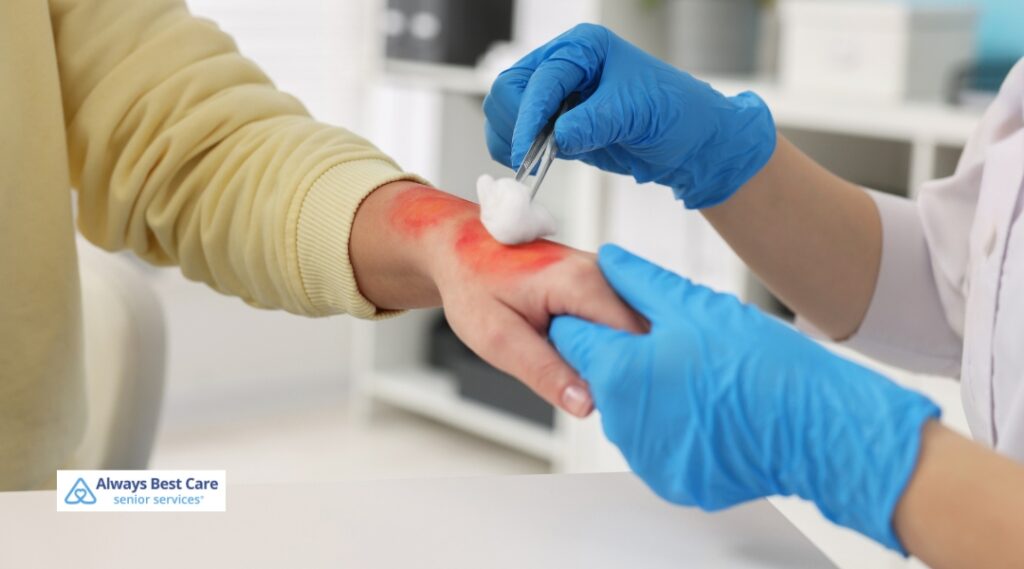
What a Skilled Home Health Nurse Does for Wound Care
When a physician orders home health services, a registered nurse visits the patient at home and delivers clinical-level wound care as part of a structured treatment plan. This is not the same as general caregiving — it is medical care delivered in a home setting.
Skilled nursing wound care typically includes:
- Wound assessment — Measuring size, depth, and tissue type; documenting changes over time
- Debridement — Removing dead or infected tissue to promote healthy healing (when ordered)
- Dressing selection and application — Choosing the right dressing based on wound type, moisture level, and infection risk
- Infection monitoring — Identifying early signs of complications and communicating with the physician
- Medication management — Administering or overseeing topical treatments or oral antibiotics as prescribed
- Patient and family education — Teaching caregivers how to perform basic wound checks between visits and when to escalate concerns
- Care coordination — Keeping the broader healthcare team informed of progress or setbacks
Skilled nursing visits are particularly valuable during the transition home after hospitalization or surgery, when wound complications are most likely to occur.
Preventing Pressure Injuries Before They Start
For seniors with limited mobility, prevention is as important as treatment. Pressure injuries develop when sustained pressure cuts off blood flow to the skin — most commonly over bony prominences like the heels, sacrum, hips, and elbows.
Evidence-based prevention strategies include:
- Repositioning every two hours for bed-bound individuals; every 15–30 minutes for those in wheelchairs
- Pressure-redistributing surfaces — Specialized mattresses and cushions that reduce peak pressure points
- Skin hygiene — Keeping skin clean and dry, especially in areas prone to moisture (incontinence, perspiration)
- Nutrition support — Adequate protein (1.2–1.5g/kg body weight daily is often recommended for wound healing), along with hydration
- Regular skin inspections — Caregivers should check high-risk areas at every repositioning
If a pressure injury is already present, a skilled nurse can stage it accurately and implement an appropriate care plan.
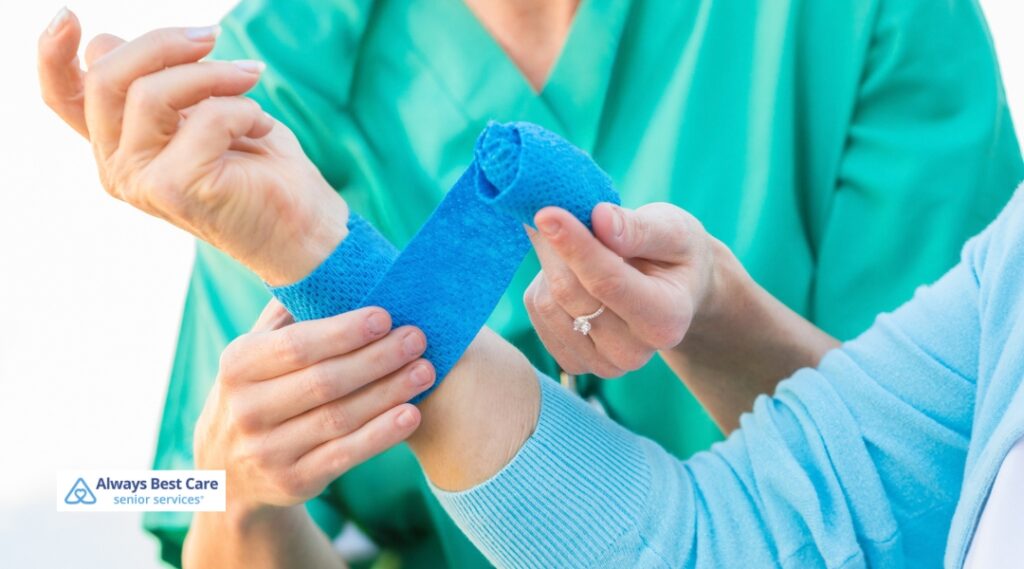
How In-Home Caregivers Support the Healing Process
Skilled nursing addresses the medical side of wound care, but recovery also depends on consistent daily support. An in-home caregiver plays a complementary role by:
- Assisting with meals and ensuring the senior eats enough protein and stays hydrated
- Helping with personal hygiene and keeping wound areas clean and dry
- Supporting mobility and repositioning to prevent new pressure injuries
- Reminding the senior to take prescribed medications
- Observing and reporting any changes in the wound or the senior’s overall condition to family or the nursing team
When home health and in-home care work in coordination, seniors get both the clinical expertise and the day-to-day support they need to heal safely.
Frequently Asked Questions
Q: How do I know if a wound needs a nurse or if I can treat it at home?
A: Minor wounds — small cuts, superficial scrapes, or minor skin irritation — can often be managed at home with proper cleaning and bandaging. However, if the wound is deep, won’t stop bleeding, shows signs of infection, or involves a chronic condition like diabetes, it’s best to consult a healthcare provider. A physician can determine whether skilled nursing is appropriate.
Q: Does Medicare cover home health wound care?
A: Yes, in many cases. Medicare Part A and Part B cover skilled nursing services at home when a physician certifies that the patient is homebound and requires skilled care. Coverage depends on medical necessity and the specific services ordered. It’s worth contacting your insurance provider or a home health agency to confirm eligibility.
Q: How often will a home health nurse visit for wound care?
A: Visit frequency depends on the wound type, severity, and the physician’s orders. Some wounds require daily visits; others may need nursing care two to three times per week. As the wound improves, visit frequency typically decreases.
Q: Can pressure injuries heal completely?
A: Stage 1 and Stage 2 pressure injuries often heal fully with proper care and pressure relief. Stage 3 and Stage 4 injuries are more serious and may take weeks to months to heal, sometimes requiring surgical intervention. Early identification and treatment significantly improve outcomes.
Q: What should I do if I notice a wound getting worse between nursing visits?
A: Contact the home health agency or the physician immediately. Don’t wait for the next scheduled visit if you notice increasing redness, swelling, drainage, odor, or if the senior develops a fever or seems confused. Most home health agencies have an on-call nurse available after hours for exactly these situations.
Q: Is wound care at home as effective as wound care in a clinical setting?
A: For many wound types, yes — particularly when a skilled nurse is involved and the home environment is appropriate. Studies have shown that home-based wound care can achieve outcomes comparable to outpatient clinic care for many patients, with the added benefit of reduced exposure to healthcare-acquired infections and greater comfort for the patient.
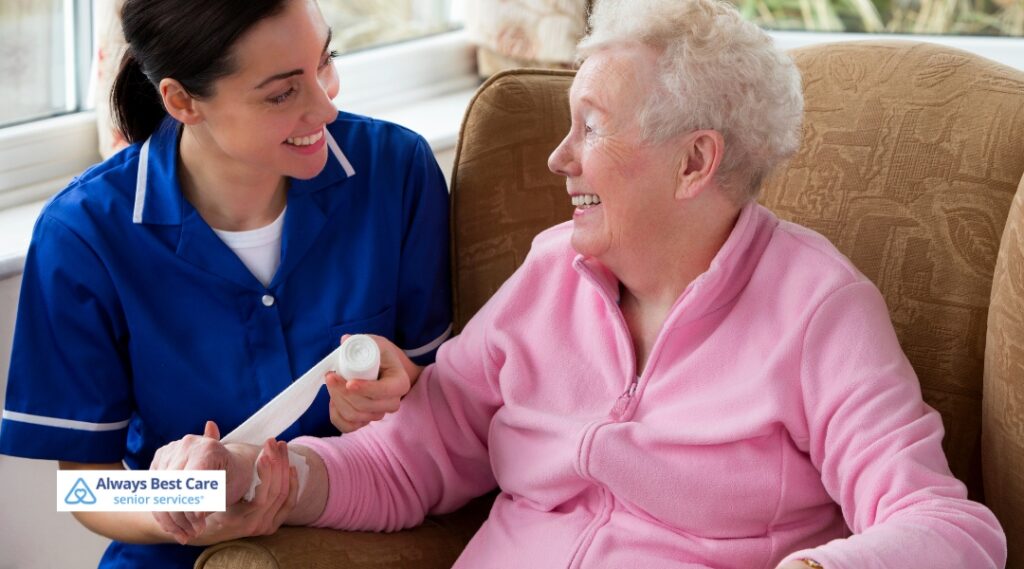
Supporting Recovery at Home in Worcester
A: Complex wound care doesn’t have to fall entirely on families. With the right professional support, most seniors can recover safely and comfortably at home — avoiding unnecessary hospitalizations and maintaining their quality of life.
Always Best Care of Worcester provides services designed to support older adults through recovery and beyond. Depending on your loved one’s needs and what’s available in your area, services may include skilled nursing through a home health referral and in-home caregiving to assist with daily tasks throughout the healing process.
If your loved one is managing a wound, recovering from surgery, or dealing with a chronic condition that affects healing, reach out to Always Best Care of Worcester at (508) 304-8556 to schedule a care consultation and explore your options.
Link to the Markdown File version of the article