
Normal Aging vs. Dementia: What to Watch For, Tips & FAQs
Table of Contents
Normal Aging vs. Dementia: Key Takeaways
- Occasional forgetfulness, like misplacing items or struggling to recall a word, is often just a normal part of aging
- When memory loss starts disrupting daily routines, relationships, or safety, it could be something more, like dementia
- From creating consistent routines to getting professional care when needed, families can take steps to minimize confusion and increase comfort
If mom and dad take a little longer to find the right word or your doting grandparents are repeating the same stories a little more than usual, it’s natural to wonder: Is this just aging or something more?
According to the Alzheimer’s Association’s 2025 Facts and Figures Report, more than 6.9 million Americans age 65 and older are living with Alzheimer’s, and that number is rising.
Understanding what’s normal and what’s not can make it a lot easier to support your loved one with compassion and the right kind of help.
By the end of this guide, you will:
- Understand the difference between normal aging and dementia
- Know how to support your loved one with memory loss
- Get clear answers to the most common questions about normal aging, dementia, and Alzheimer’s
Normal Aging vs. Dementia: What’s the Difference?
It can be hard to tell the difference between normal aging and dementia, especially when changes appear gradually.
This quick comparison can help you spot what’s likely just aging and what might be signs of dementia.
| Normal Aging | Dementia |
| Occasionally misplaces items or forgets appointments | Frequently forgets important dates, events, or conversations, even recent ones |
| Might forget names of acquaintances, but remembers them later | Struggles to recognize familiar people, including close family members |
| Maintains emotional stability and self-awareness | Might have sudden mood swings, confusion, or anger outbursts without a clear reason |
| Communicates plans clearly and remembers to check in before leaving the house | Might leave home unexpectedly, forget their destination, or become disoriented, even in familiar places |
| Sometimes has trouble finding the right word | Often has difficulty speaking clearly, with frequent pauses or using the wrong words |
| Worries about memory, but others are not concerned | Friends and family express concern, while they might be unaware that anything is wrong |
| Can still manage daily tasks and routines independently | Memory loss interferes with daily life, safety, and relationships |
| Changes don’t disrupt daily life and can be managed with simple reminders or routines, such as setting up phone alerts or keeping to a familiar schedule | Memory problems start disrupting everyday tasks, even with reminders or support that once worked |
When Memory Loss Affects Daily Life
Memory changes can be subtle at first. But when they begin to disrupt everyday routines, relationships, or your loved one’s safety, it’s time to take a closer look.
Understanding the difference between normal aging vs. dementia can help you know when it’s time to be concerned.
Here’s how to recognize when memory loss might no longer be a normal part of aging.
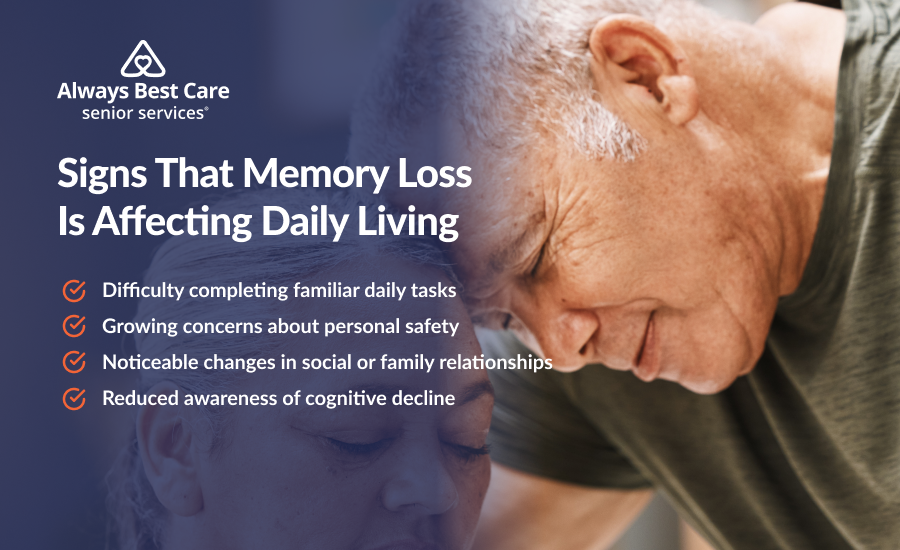
1. Difficulty Managing Daily Tasks
Maybe they’ve always kept a tidy home, but now the laundry is piling up, or bills are going unpaid. You might notice half-cooked meals left on the stove or confusion when using the microwave.
These are signs that familiar routines are becoming difficult.
2. Safety Becomes a Concern
If your loved one forgets to turn off the oven, takes the wrong medication, or gets lost in a familiar place, it’s a cause for concern.
These lapses can put them in danger, and often, they don’t even realize it’s happening.
3. Changes in Relationships
Memory loss can lead to confusion, frustration, or withdrawal. Your loved one might repeat themselves often, forget the names of close family members, or seem distant during conversations.
Over time, this can impact emotional connections and social bonds.
These shifts often prompt deeper conversations about normal aging vs. dementia and how best to support evolving needs.
4. Lack of Awareness About the Problem
This is a big red flag. If you or other family members are clearly seeing changes, but your loved one insists everything is fine, or doesn’t seem aware of any issues, it could be a sign of dementia.
People with dementia often lack insight into their own symptoms.
Dementia vs. Normal Aging: How To Support a Loved One With Memory Loss
Whether it’s occasional forgetfulness or something more concerning, here are tips to help you support your loved one with a little more patience.
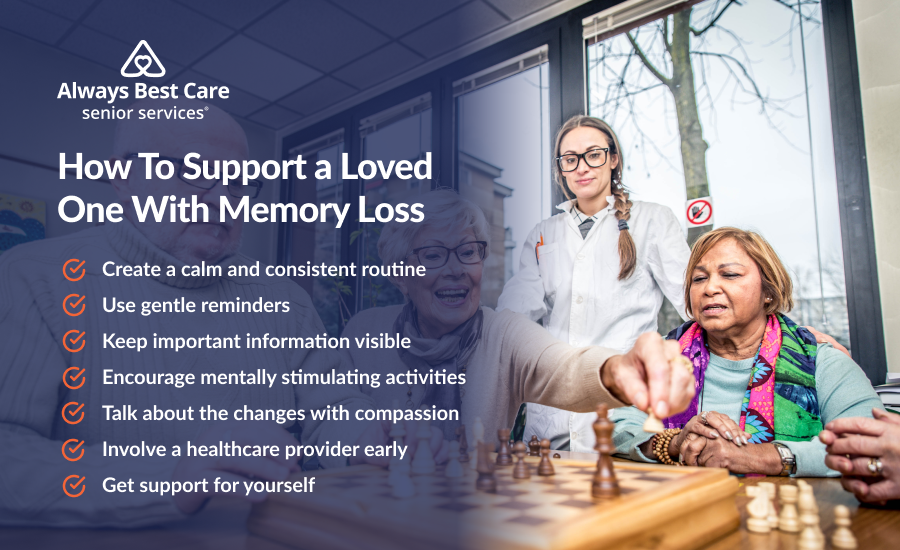
1. Create a Calm, Consistent Routine
Did you know loneliness isn’t just about being alone? For many older adults, it’s deeply tied to losing familiar routines, places, and relationships that once gave their days structure and meaning.
That’s why preserving a sense of familiarity is so important, especially for those experiencing memory loss. Simple routines can ease confusion and reduce anxiety.
Try keeping wake-up times, meals, medications, and bedtime consistent each day.
2. Use Gentle Reminders
If your elderly loved one forgets something or repeats a question, resist the urge to correct them, even if it feels harmless.
Repeated corrections can lead to frustration, embarrassment, or even emotional withdrawal, especially if they’re already feeling unsure of themselves.
Instead, respond with gentle reassurance or a simple, kind reminder.
For example, if they ask what day it is for the third time, try: “It’s Thursday, your favorite day for gardening, remember?” This answers the question but helps them feel connected and at ease.
3. Keep Important Information Visible
When memory starts to slip, even the simplest tasks can feel overwhelming for your loved one.
They might walk into a room and forget why or stand in front of a cabinet, unsure of what’s inside. That’s where gentle reminders can provide comfort.
A large-print calendar on the fridge, a note by the door that says “Take your keys,” or a checklist on the bathroom mirror can help restore a sense of control in a world that’s beginning to feel unpredictable.
4. Encourage Mentally Stimulating Activities
Keeping the mind active is just as important as helping with daily tasks.
Try encouraging simple, brain-friendly activities, like doing a puzzle together, reading out loud, playing a crossword game, or even just listening to music they enjoy.
These small moments can go a long way in keeping their mind engaged and may even help slow memory decline over time.
Plus, they’re a meaningful part of supporting someone through the changes of normal aging vs. dementia in a compassionate way.
5. Talk About the Changes With Compassion
If you’re starting to notice changes, bring them up gently. You can say something like, “I’ve noticed you’ve been forgetting a few things lately. How have you been feeling?”
Framing it this way keeps the conversation supportive and open, rather than overwhelming.
6. Involve a Healthcare Provider Early
Don’t wait until things get worse. Schedule a visit with their doctor to discuss symptoms and next steps.
An early evaluation can help identify if memory changes are due to normal aging, medication side effects, or something more serious like dementia.
7. Get Support for Yourself
Caring for someone with memory loss can take a toll on your energy, your emotions, and even your sense of self.
Some days might feel overwhelming, especially when you’re trying to stay strong for someone you love.
Consider joining a dementia caregiver support group or talking to a professional, so you don’t have to feel like you’re navigating this journey alone.
Get Support for Age-Related Memory Loss and Dementia Symptoms With Always Best Care
Occasional forgetfulness, like missing an appointment or searching for a word, is usually harmless.
But when memory issues begin to disrupt daily routines, relationships, or safety, they might point to something more serious.
Understanding the difference between normal aging vs. dementia can help you know when to seek extra support.
At Always Best Care, we’re proud to support families across more than 275 communities in the U.S. and Canada. Our team is passionate about delivering thoughtful, reliable care that truly makes a difference.
Whether you’re caring for a loved one with dementia or navigating memory changes yourself, we’re here to help.
- Dementia care services: We provide hands-on support for loved ones living with dementia, focusing on what makes them feel safe, calm, and connected to their daily life.
- Respite care services: Caring for someone full-time is a big responsibility. Whether you need a few hours or a few weeks, we’ll step in so you can catch your breath or take care of other responsibilities.
- In-home care services: From help with meals and bathing to companionship or end-of-life comfort, our caregivers provide around-the-clock care in the place your loved one feels most at home.
- Skilled home health care services: In select locations, we offer supervised care tailored to chronic conditions like heart disease, COPD, or post-surgery recovery.
- Specialized home care services: We combine compassionate care with smart technology, like balance tracking systems, emergency alert systems, and remote patient monitoring, to help keep your loved one safe at home and give you peace of mind.
- Senior living referral services: Not sure which community is the right fit? We’ll walk you through your options and help you choose a place that matches your loved one’s care needs and lifestyle preferences.
- Veterans assistance program: If your loved one served in the military, we’ll help you explore benefits that can ease the cost of care and connect you with programs designed for veterans.
Normal Aging vs. Dementia: FAQs
Why is it important to understand normal aging vs. dementia?
Recognizing the difference helps families respond with the right level of care and compassion.
While forgetfulness is often harmless, dementia can have serious safety and health implications that require early support and intervention.
What does normal age-related memory loss look like?
In general, normal age-related memory loss:
- Doesn’t interfere with daily life
- Can be managed with simple reminders or routines
- Doesn’t affect long-term memory or the ability to learn new things
Is Alzheimer’s the same as dementia?
No, Alzheimer’s and dementia aren’t the same thing. Dementia is a broad term used to describe a decline in cognitive abilities that interferes with daily life.
Alzheimer’s disease is the most common type of dementia, responsible for 60 to 70% of cases.
What are the 7 stages of dementia?
The 7 stages of dementia include:
- Stage 1: No Cognitive Decline
- Stage 2: Very Mild Cognitive Decline
- Stage 3: Mild Cognitive Decline
- Stage 4: Moderate Cognitive Decline
- Stage 5: Moderately Severe Cognitive Decline
- Stage 6: Severe Cognitive Decline
- Stage 7: Very Severe Cognitive Decline