
Caregiver Resources: Benefits & When to Ask for Help
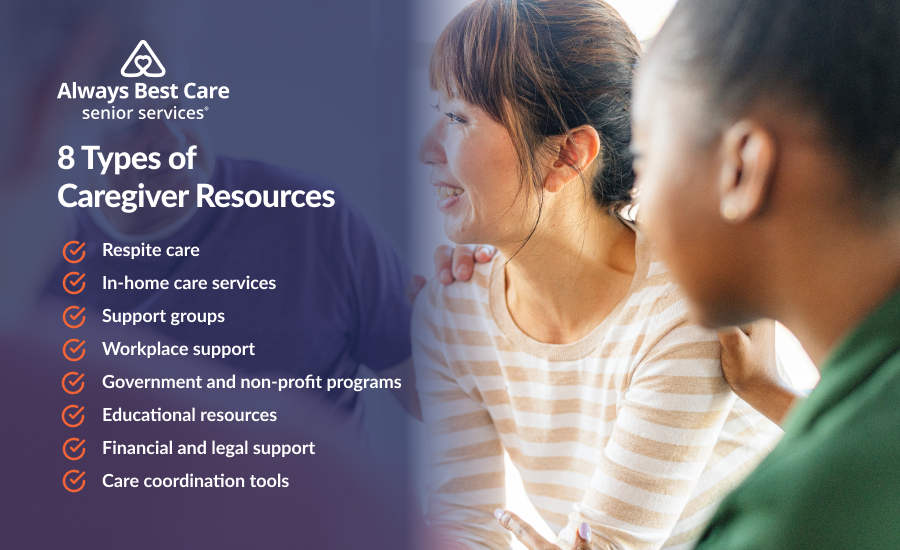
Table of Contents
Caregiver Resources: Key Takeaways
- Caregiver resources are essential to support both you and your elderly loved one
- Feeling constantly exhausted or putting your own needs last are all signs it’s time to seek caregiver resources
- Caregiver resources, including those tailored for dementia care, can help you manage daily challenges and feel more confident in your role
Decades of research show that family caregivers often carry a heavy emotional and physical load, and by the time they seek support, many are already burnt out.
Maybe you’ve felt it too. You took on the role out of love, helping your aging parent or spouse with meals, appointments, or daily routines.
At first, it felt manageable. But over time, the days got longer, your own needs took a back seat, and the weight of it all started to build.
If it feels like you’ve hit a wall, don’t worry; there are caregiver resources ready to help you.
In this guide, we will:
- Cover the different types of caregiver resources
- Navigate the signs that it’s time to step back and get a little help when you need it
- Discover how in-home care services, like those offered by Always Best Care, can make a difference
8 Must-Have Caregiver Resources for Family Members
Not sure what kind of help is out there? Here are some caregiver resources that can help you feel more supported, and maybe even a little more rested, too.
1. Respite Care
Caregivers are often the last to take a break, usually because they’re too busy making sure everyone else is okay. But stepping away doesn’t mean you’re giving up.
That’s where respite care comes in.
Whether it’s an afternoon off or a weekend to regroup, trained professionals can step in so you can rest, reset, or just remember what it feels like to have a moment to yourself.
2. In-Home Care Services
If helping your loved one with daily tasks like bathing, meals, or medication is starting to take a toll, in-home care services can ease the pressure.
Home health aides come directly to your loved one’s home, offering personalized support with daily tasks, so they get the care they need, and you finally get the reliable help you’ve been looking for.
3. Support Groups
Sometimes the most healing thing is simply hearing someone say, “Me too.”
Support groups, whether online or in person, bring you together with individuals who truly understand the ups and downs of caregiving.
It’s a space where you can vent, learn, laugh, and lean on people who truly get it.
Not sure where to find a caregiver support group?
- Start by asking your loved one’s doctor or a social worker
- Check out national organizations like the Family Caregiver Alliance, Alzheimer’s Association, or AARP
- Don’t overlook local spots like senior centers, libraries, or even faith-based groups
4. Workplace Support
Trying to juggle work and caregiving? It’s a lot and often more than anyone sees.
Thankfully, you have more support than you realize. Some workplaces offer benefits like flexible schedules, leave options, or even caregiver resources.
It’s worth checking in with HR to see what’s available.
5. Government and Non-Profit Programs
You don’t have to navigate caregiving alone or pay out of pocket for every need.
These are some of the best places to start if you want help you can count on.
- Eldercare Locator: A free public service that connects you to local services for older adults, based on your ZIP code.
- Caregiver Action Network: Offers peer support, practical tips, and advocacy to help you feel more confident in your role.
- Family Caregiver Alliance: Provides state-by-state caregiver resources, care planning guides, and educational tools tailored to complex caregiving needs.
6. Educational Resources
Feeling unsure about managing medications or caring for a loved one with dementia? You’re not alone, and it’s okay to have questions.
There are plenty of caregiver-friendly resources out there, like webinars, articles, videos, and simple printed guides, that offer tips for real-life situations.
When you start to understand what’s happening and why, the day-to-day can feel a little less overwhelming, and a lot more manageable.
7. Financial and Legal Support
Caregiving often comes with hidden costs; both emotional and financial.
From sorting through Medicaid or VA benefits to navigating legal paperwork like a power of attorney, it’s a lot to manage on your own.
The good news? You don’t have to carry every piece of this alone.
There are trusted professionals and nonprofit organizations ready to help you plan, protect your loved one’s finances, and take some of that pressure off your shoulders.
8. Care Coordination Tools
Between doctor visits, overnight hospital stays, medications, meals, and keeping everyone in the loop, caregiving can start to feel like a full-time job.
Here’s the silver lining: apps and online tools exist to help you track tasks, share updates with family, and coordinate care without dropping a ball.
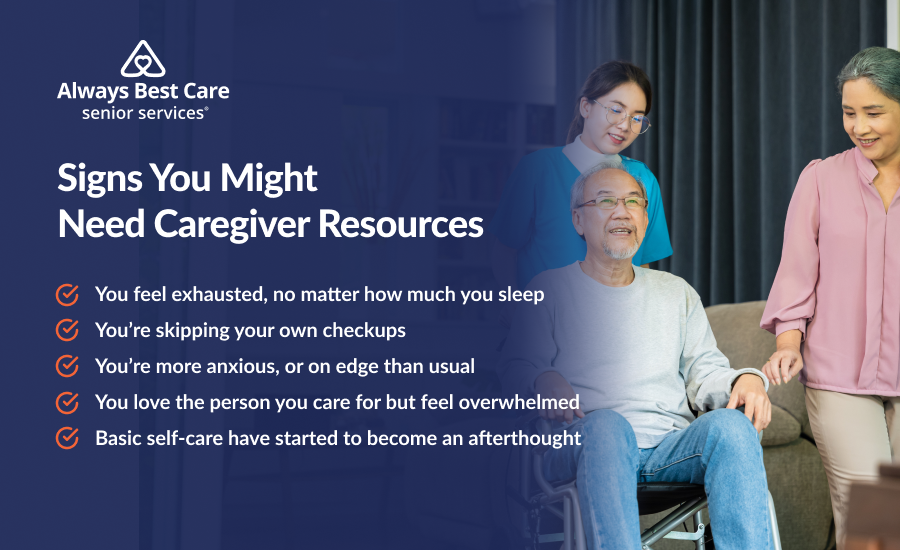
Signs You Might Need Caregiver Resources
Most caregivers don’t realize they need support until they’re running on fumes.
If you notice these signs creeping in, it might be time to pause, check in with yourself, and explore some caregiver resources:
- You’re feeling exhausted, no matter how much sleep you get
- You feel more irritable, anxious, or emotionally on edge than usual
- You’ve started forgetting appointments or skipping your own checkups
- You love the person you’re caring for, but you’re starting to feel resentful or overwhelmed
- Eating becomes an afterthought, sleep feels restless, and taking care of yourself just doesn’t happen
The Real Value of Resources for Caregivers
The 2025 Caregiving in the U.S. report makes one thing clear: caregivers need more support.
Let’s talk about what the right support can really do for both you and the person you’re caring for.
1. Relieves Stress and Prevents Burnout
Whether it’s a few hours of respite care or simply someone who listens, the right support can give you the breathing room you need to recharge and return with a little more patience and strength.
In fact, a recent study on redefining respite care found that even small breaks, woven into your daily routine, can ease stress and help caregivers feel more supported and emotionally well.
2. Saves Time and Energy
From keeping track of medications to sorting through legal paperwork, having reliable tools and support means you don’t have to handle every little thing on your own.
3. Builds Confidence and Clarity
Support groups, educational tools, and community programs connect you with people who truly understand, and that sense of belonging can be more powerful than you realize.
As it turns out, a recent study even found that caregivers who leaned on emotional and social support felt less overwhelmed and more confident in their role.
4. Make Space for Your Own Needs Again
There’s a saying: “Don’t light yourself on fire to keep others warm”.
However, caregivers often put their own needs on hold to care for someone else. The right resources serve as a gentle reminder that your health, peace of mind, and rest matter too.
Find Reliable Home Caregiver Services at Always Best Care
When caregiving starts to feel like it’s too much, you don’t have to figure it out on your own.
For over 25 years, families have turned to Always Best Care for trusted support and peace of mind.
Our team is here to step in with the support you need, whether that’s trusted senior care or helpful caregiver resources to guide you through the tough moments.
Caregiver Resources: FAQs
Are caregiver support services free?
Yes, a lot of caregiver support services are free or affordable. Community centers, nonprofits, and government programs often offer support groups, workshops, and referrals at no cost.
Services like respite care or counseling might have a fee, but there are usually financial aid or sliding-scale options to help.
What is spousal caregiver burnout?
Spousal caregiver burnout happens when caring for a husband or wife becomes so overwhelming that the caregiver starts to feel completely drained, whether emotionally, mentally, or physically.
What is the most important skill for a caregiver?
Empathy is often considered the most important skill for a caregiver.
It allows caregivers to truly understand and respond to a person’s emotional and physical needs with compassion, patience, and respect.
What are the five responsibilities of caregivers?
Caregiving looks different for everyone, but there are five key responsibilities that most caregivers take on:
- Personal care assistance: Helping your loved one get cleaned up, dressed, and ready for the day.
- Meal preparation and feeding: Making sure your loved one is eating well and following any special dietary needs.
- Errands and transportation support: Assisting with walking, transfers, or getting to and from appointments safely.
- Emotional support and companionship: Sometimes, a kind word and your presence is all it takes to brighten their day.