

How Framingham Home Care Helps Seniors With Alzheimer’s Stay Engaged

An Alzheimer’s diagnosis can bring many changes for seniors and the people who love them. Memory loss, confusion, communication changes, and reduced confidence may make a once-active older adult less likely to participate in favorite hobbies, social events, or everyday routines.
Still, engagement remains important at every stage of Alzheimer’s disease. Meaningful activities, familiar connections, and supportive daily routines can help seniors feel valued, comforted, and included. For many Framingham families, in-home care offers a compassionate way to help a loved one remain engaged while continuing to live in the familiarity of home.
What You Will Learn
- Why meaningful engagement can support comfort, confidence, and quality of life for seniors living with Alzheimer’s disease.
- How familiar routines and personalized activities can help reduce boredom, confusion, and isolation.
- Ways compassionate Framingham home care can encourage safe social connection and daily participation.
- How Always Best Care Framingham can support seniors with Alzheimer’s and provide reassurance for family caregivers.
Table of Contents
Why Engagement Matters for Seniors With Alzheimer’s
Staying engaged is not about keeping someone busy every minute of the day. It is about creating opportunities for purpose, enjoyment, connection, and comfort that match a senior’s current abilities and interests.
A meaningful activity may be as simple as listening to favorite music, folding towels, looking through family photographs, watering plants, enjoying a short walk, or helping prepare a familiar meal. These moments can provide reassurance and a sense of accomplishment, even when memory and communication become more challenging.
Regular engagement can also help reduce loneliness and encourage a more positive daily rhythm. When activities are familiar, calm, and appropriately paced, they may help seniors feel more secure in their surroundings.
How Alzheimer’s Can Affect Daily Participation
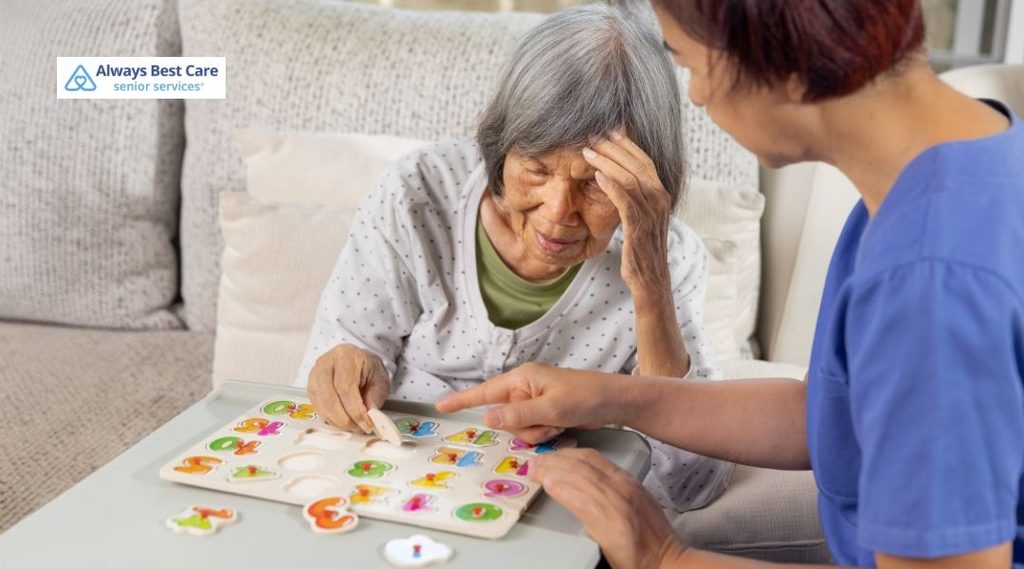
Alzheimer’s disease can make it harder for seniors to begin activities, follow multi-step instructions, remember how to complete familiar tasks, or feel comfortable in social settings. A loved one may stop participating because they feel frustrated, embarrassed, overwhelmed, or unsure of what is expected.
Changes in behavior, mood, sleep, mobility, or sensory abilities can also affect interest in activities. Rather than assuming a senior no longer enjoys a favorite pastime, families can explore ways to simplify the activity or adapt it to their loved one’s current abilities.
The goal is not perfection. It is creating positive experiences that allow the senior to participate without pressure or fear of getting something wrong.
Ways Home Care Encourages Meaningful Engagement
Professional caregivers can offer one-on-one companionship and support that helps seniors take part in activities they may no longer feel comfortable doing alone. Because care is provided in the home, caregivers can build engagement around familiar spaces, personal preferences, and established routines.
Encouraging Familiar Daily Routines
Consistent routines can be especially comforting for seniors living with Alzheimer’s. A caregiver may help create a predictable schedule for meals, personal care, light movement, relaxation, and enjoyable activities.
When seniors know what to expect, they may feel less anxious and more willing to participate. A familiar rhythm can also make daily tasks feel more manageable and less overwhelming.

Supporting Favorite Hobbies and Interests
Caregivers can learn about a senior’s life history, interests, and favorite pastimes. Someone who loved gardening may enjoy watering indoor plants or sorting seed packets. A former cook may enjoy stirring ingredients, setting the table, or discussing favorite family recipes.
Activities do not need to be complicated to be meaningful. The best experiences are often familiar, simple, and connected to the person’s identity.
Providing Companionship and Conversation
Social connection can be difficult when Alzheimer’s affects communication and confidence. A compassionate caregiver can provide a calm, familiar presence for conversation, shared meals, music, reading, games, reminiscence, and quiet companionship.
This one-on-one interaction can help reduce feelings of isolation while giving family members reassurance that their loved one has regular support and connection.
Encouraging Safe Movement and Time Outdoors
When appropriate, a caregiver can encourage gentle movement, stretching, or a short walk in a safe setting. Spending time outside, enjoying fresh air, or noticing seasonal changes can offer calming sensory experiences and a welcome change of scenery.
Caregivers can also provide supervision and mobility support, helping families feel more confident that their loved one can participate safely.
Making Activities Feel Successful
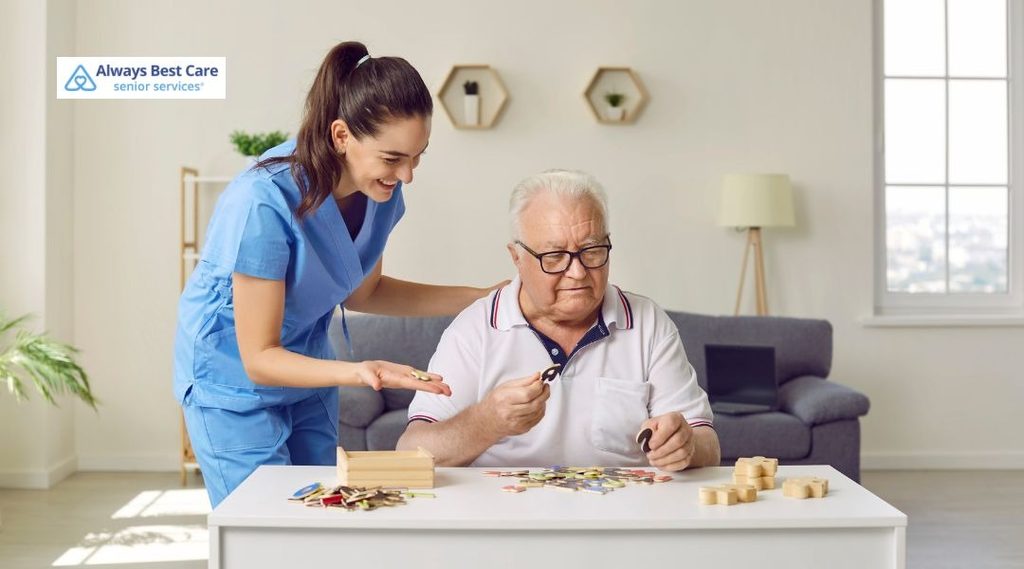
The most effective Alzheimer’s activities are adapted to the individual rather than focused on completing a task perfectly. Seniors may benefit from simple directions, familiar materials, extra time, and encouragement without correction.
Families and caregivers can make activities more enjoyable by offering one task at a time, reducing distractions, choosing the right time of day, and letting the senior stop when they seem tired or frustrated. It is also helpful to focus on the experience itself instead of the outcome.
For example, a senior who once enjoyed baking may not be able to follow a recipe independently. However, they may still enjoy smelling vanilla, stirring batter, placing napkins on the table, or sharing a warm cookie afterward. Small moments of participation can still bring comfort and joy.
Supporting Engagement at Every Stage
A person’s ability to participate may change as Alzheimer’s progresses, but the need for connection does not disappear. In the earlier stages, a senior may enjoy more independent hobbies, community outings, or social visits. As needs change, activities may become simpler and more sensory-focused.
During later stages, engagement may include listening to meaningful music, holding a familiar object, hearing a loved one’s voice, looking at photographs, receiving gentle hand massage when welcome, or sitting quietly with someone who offers reassurance.
Families do not need to force participation. Paying attention to facial expressions, body language, and mood can help caregivers identify the activities that bring the most comfort.
How Home Care Supports Family Caregivers
Family caregivers often want to provide meaningful activities for a loved one, but balancing care with work, household responsibilities, appointments, and personal needs can be difficult. Over time, caregivers may feel exhausted or unsure about how to keep their loved one engaged safely.
In-home care can offer valuable respite while providing compassionate companionship for the senior. A professional caregiver can spend dedicated time supporting routines, conversation, activities, and personal care, allowing family members time to rest or manage other responsibilities.
This support can also help families remain in their role as loved ones rather than carrying every caregiving responsibility alone.

How Always Best Care Framingham Can Help
Always Best Care Framingham provides personalized in-home care designed around each senior’s individual needs, preferences, routines, and abilities. Our caregivers can offer meaningful companionship while helping with the everyday tasks that can become more difficult for a person living with Alzheimer’s disease.
From meal preparation and light housekeeping to personal care assistance, mobility support, reminders, and engaging activities, we can tailor care to help your loved one feel safe, respected, and included at home.
Our team also understands that Alzheimer’s care affects the entire family. We provide dependable support, thoughtful guidance, and respite to help family caregivers feel less alone.
Frequently Asked Questions
Q: How can Framingham home care help seniors with Alzheimer’s stay engaged?
A: Framingham home care can provide companionship, encourage familiar routines, and support simple activities based on a senior’s interests and abilities. Caregivers may share music, conversation, photos, meals, walks, or light household tasks to promote comfort and connection.
Q: What activities are helpful for seniors with Alzheimer’s?
A: Helpful activities are familiar, simple, and enjoyable, such as listening to music, looking through photo albums, watering plants, folding towels, taking short walks, or sharing a favorite meal.
Q: Can in-home care give family caregivers a break?
A: Yes. In-home care provides seniors with compassionate support and companionship while family caregivers take time to rest, work, attend appointments, or manage other responsibilities.
Help Your Loved One Find Joy in Everyday Moments
Living with Alzheimer’s may change how a senior participates in everyday life, but it does not take away their need for purpose, comfort, or connection. With patient encouragement, familiar activities, and compassionate one-on-one support, seniors can continue experiencing meaningful moments at home.
If you are looking for Alzheimer’s home care in Framingham, reach out to Always Best Care Framingham at (508) 691-8756 today. Our caring team can help you explore personalized in-home care options that encourage engagement, support daily routines, and bring greater peace of mind to your family.
Link to the Markdown File version of the article