

Supporting a Loved One With Early-Onset Alzheimer’s in Thousand Oaks: Finding Steady Ground Together

An early-onset Alzheimer’s diagnosis can feel like the floor has shifted beneath your feet. A spouse, sibling, friend, or parent may still be working, raising children, driving, and making plans, then memory changes begin to interrupt the everyday rhythm.
There’s no magic playbook, and frankly, families shouldn’t be expected to wing it alone. Supporting a Loved One With Early-Onset Alzheimer’s in Thousand Oaks starts with patience, honest conversations, and a plan that leaves room for change. One day at a time may sound simple, yet it can be a solid place to begin.
What you will learn:
- How early-onset Alzheimer’s can affect everyday routines, communication, and family life.
- Simple ways to offer patience, reassurance, structure, and meaningful connection each day.
- Why early planning and home-safety adjustments can help families feel more prepared.
- How in-home care and respite support can bring comfort to a loved one and breathing room to family caregivers.
Table of Contents
Understanding Early-Onset Alzheimer’s
Early-onset Alzheimer’s describes Alzheimer’s symptoms that begin before age 65. At first, the changes may be easy to brush aside: a missed meeting, a forgotten password, a repeated story, or trouble following a familiar recipe. Over time, memory, language, judgment, and daily tasks can become more difficult.
It’s important to remember that these changes aren’t a loved one “not trying hard enough.” Alzheimer’s affects the brain, and frustration can run high on both sides of the conversation. A calm, respectful approach can help keep the peace at home.
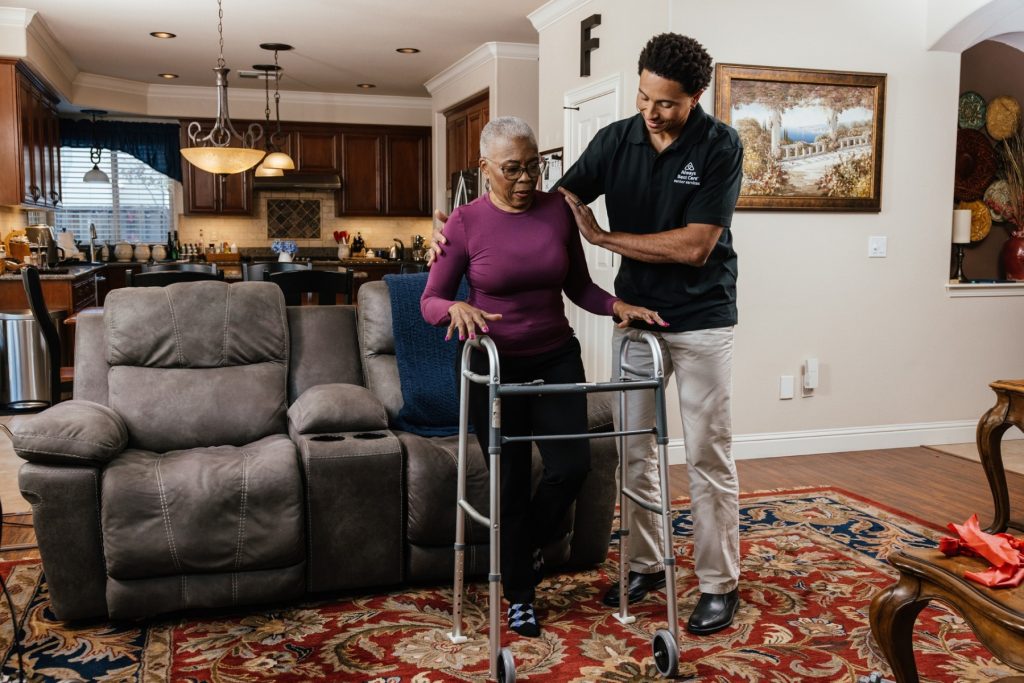
Supporting a Loved One Day to Day
Keep Communication Clear and Kind
Long explanations can sometimes muddy the waters. Speak in short, straightforward sentences and offer one idea at a time. Rather than correcting every forgotten detail, focus on reassurance and the feeling behind the words.
For example, if your loved one insists they need to leave for a job they retired from years ago, try saying, “You’ve always worked hard. Let’s sit down together and have some coffee first.” Redirecting can be gentler than arguing. After all, no one wins a tug-of-war with confusion.
Make Routines Feel Familiar
Predictability can be comforting. Keeping meals, medication reminders, errands, and bedtime on a similar schedule may reduce stress and help your loved one feel more settled.
A few small adjustments can make a big difference:
- Keep keys, glasses, and phones in the same spot.
- Use simple labels on drawers, cabinets, and doors.
- Write down appointments and daily plans in clear view.
- Reduce clutter and remove common tripping hazards.
- Break chores into manageable steps.

Protect Connection and Purpose
Memory loss doesn’t erase a person’s need to feel useful, loved, and included. Familiar music, gardening, folding laundry, favorite films, easy walks, or time with a trusted friend can bring comfort and enjoyment.
While plans may need to change, meaningful moments still matter. A good laugh, a shared meal, or a sunny afternoon outdoors can be worth its weight in gold.
Plan Before a Crisis Arrives
Supporting a Loved One With Early-Onset Alzheimer’s in Thousand Oaks often involves practical planning sooner than families expect. Talking about preferences early gives your loved one a voice in decisions about finances, healthcare, driving, work, and future care.
It may help to gather important documents, list key contacts, and discuss who can assist with appointments or household responsibilities. Take it slowly. These conversations can be emotional, so there’s no need to solve every question in a single afternoon.

How In-Home Care Can Help
As needs change, bringing in help can ease pressure on the entire household. In-home dementia care can provide support while helping a loved one remain in familiar surroundings.
A caregiver may assist with personal care, meal preparation, light housekeeping, transportation, companionship, medication reminders, and routines. Just as important, a caregiver can offer a steady presence during the parts of the day that feel most confusing or tiring.
Always Best Care of Thousand Oaks provides personalized dementia-care support focused on safety, comfort, and dignity, along with non-medical in-home care and respite options for local families.
Make Space for Caregivers, Too
Caregiving can be deeply meaningful, but it can also wear a person down. You may feel worried, tired, sad, or stretched thin, sometimes all before lunch. That doesn’t mean you’re doing anything wrong.
Respite care can give family caregivers time to work, rest, attend appointments, or simply catch their breath. Even a few dependable hours of support can make the week feel more manageable. Always Best Care of Thousand Oaks can help families discuss a flexible care plan through a consultation.

Frequently Asked Questions
Q: What is early-onset Alzheimer’s?
A: Early-onset Alzheimer’s is Alzheimer’s disease that begins before age 65. It may affect memory, language, judgment, work performance, relationships, and the ability to manage daily tasks.
Q: How can I communicate with a loved one who has early-onset Alzheimer’s?
A: Use short, calm sentences, give one instruction at a time, and offer simple choices. Focus on reassurance rather than correcting every mistake, and redirect the conversation if frustration builds.
Q: When should we consider in-home care for early-onset Alzheimer’s?
A: Consider in-home care when daily tasks, transportation, home safety, routines, or caregiver responsibilities become harder to manage alone. Care can begin with a few hours of support and adjust as needs change.
Q: Can a person with early-onset Alzheimer’s stay at home?
A: Many people can remain at home for a period of time with appropriate planning, home-safety changes, family involvement, and in-home support tailored to their needs.
How can Always Best Care of Thousand Oaks support my family?
Always Best Care of Thousand Oaks offers dementia care and non-medical in-home assistance that can be tailored to a loved one’s routines, preferences, and changing support needs.
A Caring Next Step
Supporting a Loved One With Early-Onset Alzheimer’s in Thousand Oaks is a journey with plenty of twists and turns. Still, you don’t have to carry every responsibility by yourself.
Reach out to Always Best Care of Thousand Oaks at (805) 691-0586 to discuss your family’s needs and explore a care plan that brings more comfort, safety, and breathing room to each day.
Link to the Markdown File version of the article