

Your First In-Home OT Visit in Kernersville: What Seniors and Families Can Expect

Hearing that a loved one needs occupational therapy at home can stir up mixed feelings. On one hand, it’s reassuring to know help is coming. On the other hand, many Kernersville families quietly wonder, “What exactly is going to happen during that visit?”
The first in-home OT appointment is designed to be practical and reassuring. It gives the therapist a clear picture of how your loved one moves, manages daily tasks, and navigates their living space—then turns that insight into a realistic plan for safer, more independent living.

Table of Contents
Scheduling and Basic Information
Usually, the therapist or home health provider will:
- Confirm the visit time and address
- Review basic medical information and the doctor’s referral
- Explain who will be present and how long the visit will last
Some families like to gather recent discharge papers, a medication list, and any equipment they already have (walkers, canes, shower chairs) so everything’s easy to review.
Preparing the Home and Family
You don’t need to “stage” the house. In fact, therapists prefer to see real-life conditions. It can help to:
- Make sure pets are secured if they’re likely to jump or get underfoot
- Have a comfortable place for your loved one to sit and rest during conversations
- Decide which family member will be present to answer questions and share concerns

Step One: Getting to Know Your Loved One
The visit typically starts with a conversation. The occupational therapist will ask about:
- Recent health events (falls, surgeries, hospital stays)
- Current diagnoses and medications
- What a typical day looks like from morning to night
- Which tasks feel hardest or most frustrating right now
They’re not just gathering facts—they’re listening for what matters most to your loved one, whether that’s showering independently, cooking simple meals, or getting outside safely.
Goals from Seniors and Families
Next, the therapist will talk about goals. Common examples include:
- “I want to get in and out of the shower without feeling scared.”
- “I’d like to walk to the mailbox and back each day.”
- “I need to be able to get out of bed more easily.”
These goals help shape the rest of the visit and guide future sessions.
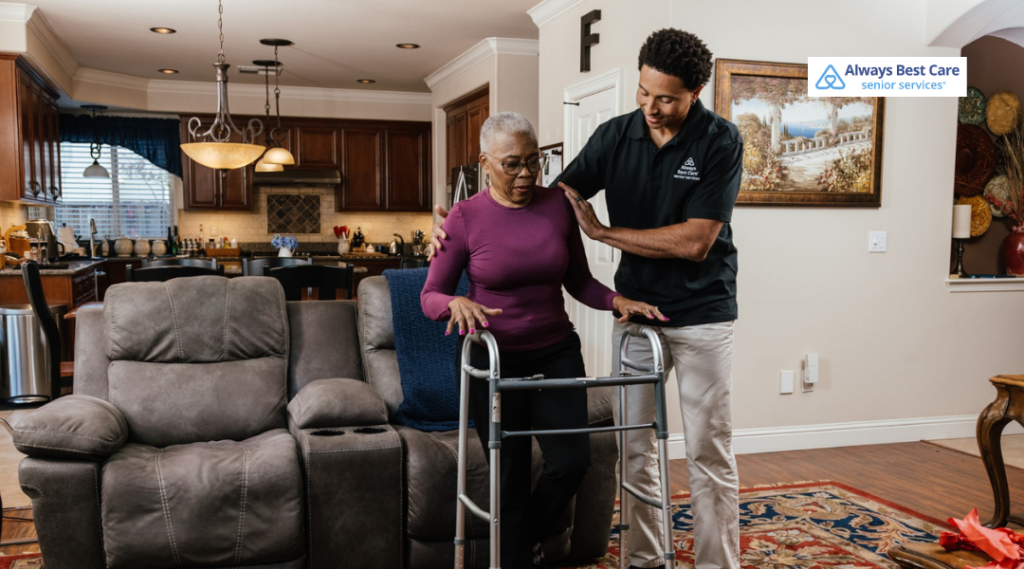
Step Two: Gentle Assessments of Movement and Safety
Occupational therapy evaluations are hands-on but usually low-key. The therapist may ask your loved one to:
- Sit and stand from a chair
- Walk a short distance, with or without a device
- Reach for items at different heights
- Move between rooms the way they normally do
They’re watching how safely and comfortably these tasks are done—not grading or judging. If something looks risky, they’ll make notes and talk through safer options.
Looking at Daily Activities
The therapist may also observe or ask about:
- Bathing and toileting routines
- Dressing (especially shoes, socks, and fasteners)
- Eating and simple meal preparation
- Getting in and out of bed or a favorite chair
This helps them understand where your loved one is struggling and where small changes could make a big impact.

Step Three: Walking Through the Home Together
A key part of an in-home OT visit is a walk-through of the house. The therapist will pay close attention to:
- Entryways, stairs, and steps
- Hallways and tight corners
- Bathroom setup, including tub, shower, and toilet
- Bedroom layout and pathways around the bed
- Living room furniture arrangement
They’ll look for tripping hazards, poor lighting, or awkward layouts that make movement harder or less safe.
Immediate Suggestions and Quick Wins
Often, the therapist can point out simple changes on the spot, such as:
- Removing or securing loose rugs
- Clearing clutter from walkways
- Adding a nightlight in the bathroom or hall
- Shifting furniture to open up a clearer path
These quick adjustments can reduce fall risk right away while a longer-term plan is forming.

Step Four: Talking Through Equipment and Home Modifications
Based on what they see and hear, the therapist may suggest tools like:
- Grab bars, shower chairs, or raised toilet seats
- Walkers, canes, or rollators at the right height
- Reachers, sock aids, or long-handled sponges
- Easy-grip utensils or lightweight cookware
They’ll explain why each item might help and, if possible, demonstrate how it should be used.
Home Changes That Support Independence
Some recommendations may involve small changes; others might involve larger decisions, such as:
- Installing railings along stairs
- Adjusting bed height
- Setting up a “main floor” living area to reduce stair use
The therapist will prioritize what’s most important for safety and independence, taking budget and practicality into account.

Step Five: Creating a Personalized OT Plan
By the end of the visit, the therapist will outline a plan with specific goals, such as:
- Safely transferring in and out of the tub or shower
- Walking certain distances with or without rest breaks
- Completing basic self-care with less hands-on help
They’ll also estimate how often OT visits may be needed and what they’ll focus on in upcoming sessions.
Involving Families and Caregivers
Families are encouraged to ask questions and share concerns. The therapist may:
- Teach a few simple exercises or techniques to practice between visits
- Offer guidance on how to help without “taking over”
- Explain warning signs that should be reported to the doctor
If your loved one has in-home caregivers through Always Best Care, the therapist can coordinate with them so everyone is working from the same playbook.
How Always Best Care in Kernersville Fits In
In Kernersville and the surrounding Winston-Salem area, Always Best Care provides in-home caregivers who can help families put OT recommendations into action day after day. Caregivers can:
- Support safer bathing, dressing, and transfers using techniques the therapist recommends
- Help set up the home according to the OT’s safety suggestions
- Encourage and assist with light exercises and daily routines that build strength and confidence
This teamwork between occupational therapists and in-home caregivers helps seniors maintain independence longer while giving families added peace of mind.

FAQs: In-Home Occupational Therapy Visits in Kernersville
Q: What should we have ready before the first in-home OT visit?
A: It’s helpful to have a current medication list, recent discharge or doctor’s notes, and any mobility devices or equipment your loved one already uses. The home doesn’t need to be perfect—therapists want to see real-life conditions.
Q: How long does a first in-home occupational therapy visit usually take?
A: Most initial visits last about 60–90 minutes, depending on medical history, questions, and how complex the home setup is.
Q: Will the therapist make my loved one do anything unsafe or painful?
A: No. Occupational therapists focus on safety and comfort. They may gently challenge your loved one, but they won’t push beyond what’s reasonable for their health and current abilities.
Q: Do therapists always recommend new equipment or big home changes?
A: Not always. Sometimes small changes—like adjusting furniture, securing rugs, or changing how a task is done—are enough. Equipment is suggested when it clearly improves safety or independence.
Q: How do in-home caregivers and occupational therapists work together in Kernersville?
A: Therapists evaluate and create the plan; caregivers help carry it out. They can assist with exercises, follow safety strategies, and keep the home arranged according to the OT’s recommendations, updating the therapist or family when needs change.

A First Step Toward Safer Independence
A first in-home OT visit in Kernersville isn’t about pointing out everything that’s “wrong.” It’s about understanding how your loved one lives today and finding practical ways to make each task safer, easier, and less stressful.
With a thoughtful therapist, engaged family members, and supportive in-home caregivers, that first visit becomes the starting point for a clear, realistic path toward greater independence, comfort, and peace of mind—right at home. Always Best Care of Kernersville at (336) 396-8919 to learn more and schedule your free consultation.
Link to the markdown version of this blog.